
Pool Tile Cleaning in Central Florida
Premium Pool Tile Cleaning for Homeowners Across Central Florida

Professional Pool Tile Cleaning in Central Florida
Bright Tile Again, Without the White Crust
That chalky white line along your pool tile isn’t dirt. It’s calcium carbonate, the same mineral as chalk and limestone, and it builds up right where water evaporates. Add sunscreen, body oils and dust, and the line turns gray, rough and hard to scrub off.
Our pool tile cleaning service takes that buildup off without scratching the glazed finish. We inspect the tile and grout, lower the water only as far as the job needs, and remove the scale and scum line with methods made for pool tile. Heavy crust gets a gentle media blast where the tile allows it. Spillovers and raised spa walls get the same care, since they scale up fastest.
Cleaning is only half the job. If your water keeps dropping calcium, the white line comes right back. So we test your calcium, pH and alkalinity and tell you what to change to keep the tile clean longer.
Clean tile is also the first thing guests notice. So whether it’s the waterline band, the trim on your steps and benches or the face of a spillover spa, we treat it with the same care. And because we also brush tile lines on our weekly routes, we can keep it looking clean after the deep cleaning is done.
We work on pools across Central Florida every week and see this buildup on almost every older pool. Fill out the form for a free pool tile cleaning quote.
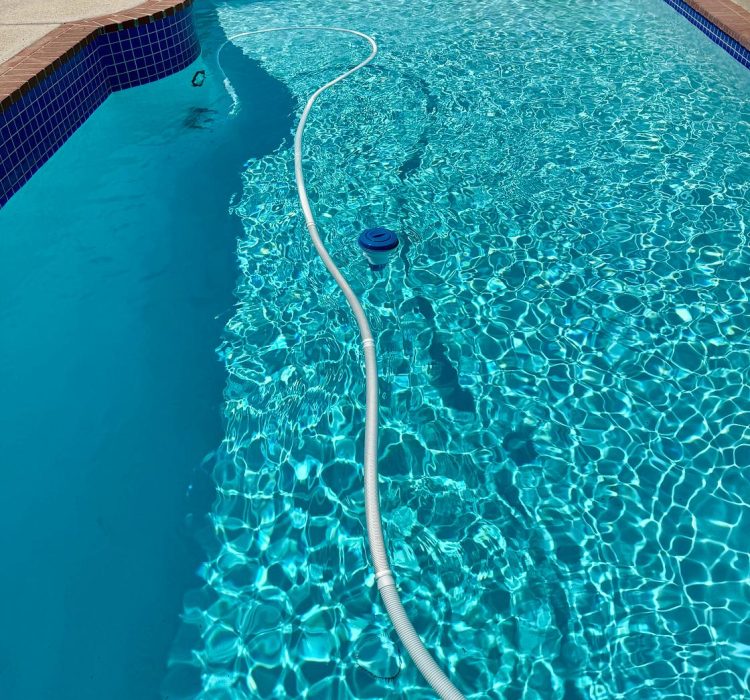




What That White Line on Your Pool Tile Really Is
Most of the crust on pool tile is calcium scale, a crusty white deposit that often looks gray once dirt gets into it. It forms fastest where water evaporates or runs hot. That’s why it shows up in a band at the waterline, along spillovers and on raised spa walls that stay wet and dry out over and over.
The waterline also collects a scum line. Every splash and every change in water level leaves a thin film on the tile that dries into a mix of scale, skin, suntan oil, cosmetics and dust. Once it starts, the line grabs more gunk from the water and keeps growing. If your water is hard or out of balance, most of that scum line is scale.
Left alone, it gets worse. Rough scale can scrape swimmers, and algae likes to start in the grout between tiles, feeding on the oily film.
Why Pool Tile Calcium Keeps Coming Back
Scale forms when pool water carries more calcium than it can hold. High pH, high alkalinity and high calcium hardness together are the usual cause. Evaporation makes it worse, because it takes away pure water and leaves the minerals behind. Every top-off brings in more, and fill water can carry 400 ppm or more of dissolved solids.
For a pool, the healthy range for calcium hardness is 200 to 400 ppm. Once it climbs above 500, you have to run lower pH and alkalinity to keep scale from forming. Pool pros use a number called the saturation index to judge this. Balanced water sits between -0.3 and +0.3. At +0.4 and above, the water is scaling, and your tile line is where it shows.
Your chemicals can add to it, too. Calcium hypochlorite, a common shock, adds calcium and raises pH every time you use it. Also, water drawn from wells and aquifers tends to carry more calcium than surface water. So a pool that gets topped off often and shocked with cal-hypo can climb in calcium year after year without anyone noticing.
That’s why pool tile calcium removal on its own is a short-term fix. The tile needs cleaning, and the water needs balancing, or you’ll be looking at the same white line next season.
Why DIY Tile Cleaning Can Do More Harm Than Good
Pool tile has a glazed, non-porous finish. Scratch that glaze and dirt sticks faster than before. A few common DIY mistakes cause most of the damage:
- Steel brushes, which can scratch tile and damage the pool wall with regular use
- Household cleaners, some of which contain phosphates that feed algae and can make the scum line worse
- Cleaners that foam, which leave residue in the water
- Draining the pool to get at the tile, which is risky in Central Florida’s high water table
Acid-based scale removers do work on calcium. Used carelessly, though, strong acid can etch grout and the plaster just below the tile, and low-pH runoff throws off the whole pool. That’s why we keep acid off the plaster, work in small sections and rinse as we go.
An empty pool can actually float up out of the ground when the water table rises. So we only lower the water a few inches, just enough to reach the scale, and we never drain a pool to clean tile.
Our Pool Tile Cleaning Process
Inspection
We look at the tile, the grout and the scale. Loose or popping tiles can be a sign of a leak, so if we find any, we’ll point them out and get our repair team involved.
Cleaning the Tile Line
Light scale and scum lines come off with pool-safe, non-foaming tile cleaners and non-scratch tools. Thick, crusty calcium needs more. For that, we use a low-pressure media blast where the tile can take it, which breaks up the scale without hurting the glaze. Glass tile and softer stone get the gentlest treatment.
Rebalancing the Water
When the tile is clean, we refill to the normal level, then test and adjust calcium, pH and alkalinity. If the calcium is very high, the only real fix is replacing part of the water with lower-hardness water. We’ll tell you if that’s what your pool needs, and we can add a scale inhibitor to help hold the minerals in the water.
Final Rinse and Cleanup
After the tile is clean, we rinse the tile line and deck, then vacuum up any loosened scale and media from the pool floor. That way nothing we removed ends up back in your filter. Then we walk the tile line with you, or send photos if you’re not home.
Grout, Algae and Loose Tiles
Grout needs attention too. Water that’s out of balance on the low side, called corrosive or aggressive water, attacks tile-line grout first, along with plaster and metal parts. In addition, algae tends to take hold in grout lines because the oily scum gives it something to feed on. So when we clean tile, we also check the grout for gaps, dark spots and wear.
Loose or popping tiles are worth a closer look. They can mean water is getting behind the tile, and they’re one of the signs of a leak. We’ll flag anything like that and let you know whether it needs a repair visit.
How Often Should Pool Tile Be Cleaned?
It depends on your water. A pool with balanced water and a weekly tile brushing may only need a professional cleaning every year or two. A pool with high calcium, a spillover spa or a lot of evaporation can scale up in a single summer. For example, a raised spa that spills over all day can build a thick crust while the rest of the pool stays clean. We’ll look at your water and your tile and give you an honest answer.
Weekly brushing makes the biggest difference. Our weekly pool service brushes the tile line on every visit, which keeps the scum line from ever getting a start.
Pool Tile Cleaning Cost in Central Florida
Pool tile cleaning cost depends on how much tile you have, how thick the scale is and whether you have a spillover or raised spa wall. A light scum line takes a fraction of the time that years of hard calcium takes. Glass or specialty tile can also take extra care. Fill out the form and we’ll send you a free, exact quote after we see the tile.
Why Homeowners Choose Sunwave for Pool Tile Cleaning
We’re a family-owned Central Florida company, and we see tile scale on pools every day. We protect the glaze, we never drain a pool to get at the tile, and we fix the water chemistry so the scale doesn’t come right back. Every pool tile cleaning service visit ends with your water numbers and a short list of what to adjust, so the next cleaning is further off. Our trucks are fully stocked, and there are no long-term contracts.
Schedule Your Pool Tile Cleaning Today
Tile cleaning is one of our pool cleaning services. If the stains are on the plaster itself, our acid wash service is the better fit. It’s all part of our pool service in Central Florida. Fill out the form or call (689) 312-9063 to get started.
Our Service Areas
We serve homes across Seminole County and Orange County, including Sanford, Lake Mary, Oviedo, Winter Springs, Orlando, Winter Park and Windermere. See every community in our service area.
Pool Tile Cleaning FAQs for Central Florida Homeowners
Here are the tile and calcium questions Central Florida homeowners ask us most. Still wondering about something? Give us a call at (689) 312-9063.
The best thing to clean pool tiles with is a non-foaming cleaner made for pools and a brush or pad that won't scratch the glaze. Skip steel brushes and household cleaners, since some contain phosphates that feed algae. Thick calcium scale needs more than scrubbing, usually a professional media blast or a careful acid treatment made for tile.
You clean pool tiles without draining by lowering the water a few inches at most, just enough to reach the scale, and cleaning the tile in place. Draining isn't needed and can be risky in Central Florida, where a high water table can push an empty pool up out of the ground. Refill and rebalance the water when you're done.
The cost to clean pool tiles depends on how much tile the pool has, how thick the scale is and whether there's a spillover or raised spa wall. A light scum line is a quick job, while years of hard calcium takes much longer. Glass or specialty tile can need extra care. We give free quotes after seeing the tile.
Pool tiles should be brushed every week and professionally cleaned when scale starts to build, which can be every year or two with balanced water. Pools with high calcium, spillover spas or lots of evaporation can scale up in one summer. Keeping calcium between 200 and 400 ppm and the water balanced stretches the time between cleanings.
CLR can dissolve some light calcium, but it isn't made for pools, and household cleaners can leave residue or add phosphates that feed algae. On pool tile, use a scale remover made for pools and rinse it well. For thick, crusty calcium, a professional cleaning works better, and balancing the water keeps it from coming back.
Bead blasting can be a good way to remove heavy calcium from pool tile, because the media breaks up scale that scrubbing can't touch. It needs the right media and low pressure so it doesn't dull the glaze or damage grout, and softer tile may need a gentler method. It works best when the water is balanced afterward so scale doesn't return.
You shouldn't use a pumice stone on glass tile. Pumice can scratch glass and glossy glazes, and those scratches hold dirt and scale even faster. On glass tile, stick to non-abrasive pool tile cleaners and soft pads. If the calcium won't budge, call a pro who can remove it without marking the surface.
To get calcium off a spa spillover, clean the tile the same way as the pool's waterline but expect thicker scale. Spillovers stay wet, dry out and run warm, so calcium drops out there faster than anywhere else. After cleaning, lower the calcium and keep pH and alkalinity in range, or the white crust will be back within months.
Lowering the calcium in your pool water can help stop waterline scale if it's above 400 ppm. The only practical way is to replace part of the water with lower-hardness water. Keeping pH and alkalinity in range matters just as much. Balanced water, with a saturation index between -0.3 and +0.3, is what keeps scale from forming.
Yes, calcium scale that's been building for years can usually still be removed. Old scale is thicker and harder, so it takes more time and often a media blast, but the tile underneath is usually fine. Once it's clean, balancing the water is what keeps it from building back up. We'll tell you honestly if any tiles are too damaged to save.