Pool Filter Replacement and Installation in Central Florida
Premium Pool Filter Replacement for Homeowners Across Central Florida

Pool Filter Replacement Sized to Your Pump and Pool
Expert Pool Filter Replacement and Installation
Your filter does the quiet work that keeps your pool clear. In Central Florida, it catches pollen, dust, leaves and the dirt that summer storms wash into the water. When a filter wears out, cracks or is simply too small for your pump, the water shows it. A new filter, sized correctly and installed right, fixes that for years.
Our pool filter replacement service covers both jobs people mean by it. Sometimes you just need a new cartridge. Other times you need a whole new filter, or you want to switch from sand to cartridge. First, we check your pump’s flow and your current filter’s size. Next, we explain sand, cartridge and DE filters in plain English, so you can pick the right fit.
Once you choose, we give you a clear quote before any work. On install day, we plumb the new filter in the right spot, bleed the air, check for leaks and note the clean starting pressure. That number makes it easy to tell when the filter needs cleaning later.
We install Hayward, Pentair, Jandy and Zodiac filters across Central Florida. Whether you need a pool filter cartridge replacement or a brand-new filter, fill out the form for a free pool filter replacement quote. We’ll give you honest advice on what your pool actually needs, even when that’s just a new cartridge instead of a whole new filter. We also check your pump and plumbing while we’re there.




New Cartridge or New Filter?
Not every filter problem calls for a new filter. If the water is cloudy and the pressure is high, the filter may just need a deep clean, and our filter cleaning service handles that. If the filter leaks, blows sand into the pool or has a broken part inside, our pool filter repair team can often fix it.
Replacement makes sense in three cases. First, a cartridge that’s torn, flattened or still dirty after a good cleaning needs a new element. Second, a cracked tank or a filter with several failing parts usually calls for a new filter. Third, a filter that’s too small for your pump will never keep up, no matter how often you clean it.
Pool Filter Cartridge Replacement
Cartridges are meant to wear out over time. The pleated fabric wears out over time, and cleaning can only bring it back so many times. Signs it’s time include torn or frayed pleats, crushed or cracked end caps, pleats that stay stained after cleaning and a clean pressure that keeps climbing.
When we replace a cartridge, we match the exact size and fit for your filter. We also check the lid O-ring, the air relief valve and the center pipe, because a new cartridge that doesn’t seat right lets dirty water slip past it. The housing itself usually lasts much longer than the cartridges, so a new element is often all you need.
Sand Filter vs Cartridge Filter vs DE
Each filter type has its strengths. The best one for your pool depends on your space, the time you want to spend on upkeep and your budget.
Sand Filters
Sand filters are simple and tough. They trap particles down to about 25 to 100 microns and clean themselves by backwashing, which sends dirty water out the waste line. The sand itself lasts a long time, often five to 15 years, and our sand change service replaces it when it wears out. The trade-off is that sand catches less fine dirt than the other two types, and backwashing uses water.
Cartridge Filters
Cartridge filters trap particles down to about 10 to 25 microns, so they catch finer dirt than sand. They also take up about half the space of a sand or DE filter. Because you clean a cartridge by rinsing it instead of backwashing, you save water. On the other hand, cartridges don’t like too much flow. Push more water through them than they’re rated for, and the water forces dirt through the pleats and back into the pool.
DE Filters
DE filters catch the smallest particles of any pool filter, down to about 2 to 6 microns. They use grids coated with a fine powder, which gives you very clear water. However, they take the most upkeep, since the grids need regular cleaning and fresh powder after each backwash. They’re a good fit for owners who want the clearest possible water and don’t mind the extra work.
What Size Pool Filter Do I Need?
The right filter size depends more on your pump’s maximum flow than on your pool’s gallons. Every filter has a data label that lists its filter area and its maximum flow rate. The pump’s top flow has to stay at or below that rating. Otherwise, water rushes through too fast, and the filter can’t do its job.
How We Size a Replacement Filter
We start with your pump’s maximum flow in gallons per minute. Then we divide by the flow rate the filter media can handle per square foot. That gives the minimum filter area you need. For example, a cartridge rated for low flow per square foot needs much more surface area than a sand filter handling the same pump. We compare the result to the label on each filter we recommend.
Can a Pool Filter Be Too Big?
A filter that’s bigger than the minimum usually isn’t a problem. In fact, extra filter area often means longer runs between cleanings. The real risk runs the other way. A filter that’s too small for the pump lets dirt pass through, wears out faster and, on a sand filter, lets water channel through the sand. Likewise, adding a bigger pump to an old filter can overwhelm it, so our pool pump replacement team sizes both together.
Converting From Sand to Cartridge
Yes, you can replace a sand filter with a cartridge filter. Many Central Florida owners make the switch to save water and get clearer results. The job involves removing the old tank, setting the new filter, adjusting the plumbing and sizing the cartridge filter to your pump’s flow. Since cartridges don’t backwash, your waste line may no longer be needed, and you’ll clean the filter by rinsing the cartridges instead.
How We Install Your New Filter
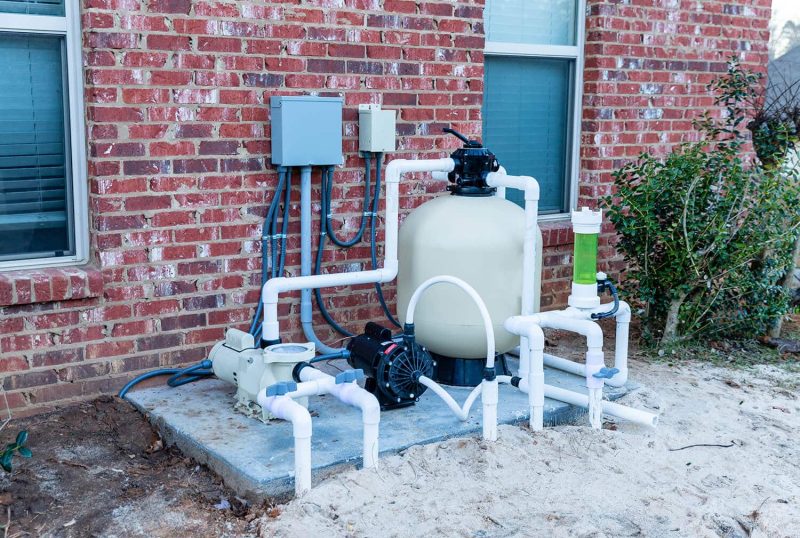
A home pool filter sits after the pump, where it works under pressure. That pressure is why installation matters. Air from the pump collects at the top of the filter, so we set up the air relief valve and bleed the system before start-up. We also shut off the pump and open the air bleed before touching any clamp or valve, since a pressure filter can come apart violently if someone opens it while it’s running.
Plumbing order matters, too. The water should flow from the pump to the filter, then to the heater, then to any salt cell or chlorinator. We leave room around the filter so it’s easy to service later, and we record the clean starting pressure on your gauge.
Protecting Your New Filter
A few details keep a new filter working longer. Chlorine and acid should enter the system after the filter, because chemicals fed before it shorten filter runs and raise pressure. If you have a heater, a check valve between the filter and the heater stops hot water from flowing back and warping the filter parts when the pump shuts off. We check both on every install.
Choosing a Filter for Central Florida Pools
Central Florida pools face a steady load of dirt. Oak and pine pollen coat the water every spring. Afternoon storms wash leaves, sand and mulch into the pool all summer. Screen enclosures help, but fine dust still gets through. For that reason, we lean toward filters with plenty of surface area, so they can handle a heavy load between cleanings.
Your habits matter as well. If you’d rather not backwash or deal with powder, a large cartridge filter is usually the easiest to live with. If you want the simplest setup possible, sand is hard to beat. If water clarity is your top priority, DE gives you the best polish. We’ll walk you through the trade-offs for your pool.
Our Pool Filter Installation Process
Every pool filter installation follows the same steps:
- Checking your pump’s flow, your current filter and your plumbing
- Sizing the new filter and explaining your options
- Giving you a clear quote before any work
- Shutting off the pump, bleeding the air and removing the old filter
- Setting the new filter and plumbing it in the right order
- Starting the system, bleeding the air and checking for leaks
- Recording the clean starting pressure and showing you how to read the gauge
Pool Filter Replacement Cost
Pool filter replacement cost depends on what you’re replacing. A new cartridge costs the least. A new filter of the same type and size, using the same plumbing, costs more. Switching filter types, moving to a larger filter or changing the plumbing adds to the price. We always give you a clear price before we start.
Why Central Florida Homeowners Choose Sunwave
Sunwave is a family-owned Central Florida company with a licensed team. We size your filter to your pump instead of guessing, and you get a price before any work begins. There are no long-term contracts. Plus, one company can handle your filter, your pump and your weekly cleaning. Every weekly pool service visit includes a photo of your pressure gauge, so we catch filter problems early. If you’re replacing more than one piece of equipment, see our pool equipment installation services.
Schedule Your Pool Filter Replacement Today
Pool filter installation is part of our pool service in Central Florida. Fill out the form or call (689) 312-9063 to get clean, clear water again.
Our Service Areas
We serve homes across Seminole County and Orange County, including Sanford, Lake Mary, Oviedo, Winter Springs, Orlando, Winter Park and Windermere. See every community in our service area.
Pool Filter Replacement FAQs for Central Florida Homeowners
Here are the pool filter replacement questions Central Florida homeowners ask us most. Still deciding? Give us a call at (689) 312-9063.
A pool filter replacement costs the least when you only need a new cartridge. A new filter of the same type and size, using the same plumbing, costs more. Switching filter types, moving up in size or changing the plumbing adds to the price. We check your pump and plumbing first and give you a clear quote before any work.
The size pool filter you need for a 30,000 gallon pool depends on your pump's maximum flow more than the gallons. Divide the pump's top flow in gallons per minute by the filter media's rated flow per square foot. That gives the minimum filter area. Then pick a filter whose label rating meets or beats your pump's flow.
A pool filter goes after the pump on almost every home pool. The pump pushes water into the filter under pressure, then on to the heater and any salt cell or chlorinator. Because air from the pump collects at the top of the filter, it needs a working air relief valve. Always bleed the air before opening it.
Yes, you can replace your sand filter with a cartridge filter. The job means removing the old tank, adjusting the plumbing and sizing the cartridge filter to your pump's flow. You'll clean it by rinsing the cartridges instead of backwashing, which saves water. Cartridges don't like too much flow, so matching the filter to the pump is key.
The best pool filter type depends on what you want most. DE filters catch the finest dirt, down to about 2 to 6 microns, but take the most upkeep. Cartridge filters catch dirt down to about 10 to 25 microns and save water. Sand filters are the simplest and toughest, but catch less fine dirt, about 25 to 100 microns.
A pool filter usually can't be too big in a way that hurts your water. Extra filter area often means longer runs between cleanings. The real problem is a filter that's too small for the pump, which lets dirt pass through and wears out faster. A larger filter costs more up front and needs space on the pad, so size it sensibly.
You get different size recommendations for a replacement pool filter because people size them in different ways. Some go by pool gallons, some by pump horsepower and some by the pump's actual flow. The flow method is the right one. Match the filter's labeled maximum flow to your pump's top flow, and pick a size at or above it.
A cartridge filter's housing needs replacing much less often than the cartridge. The cartridge is the part that wears out. The housing usually lasts until it cracks, the lid threads wear or the clamp or lock ring fails. A cracked housing should be replaced right away, because it holds water under pressure and can fail suddenly.
To pick a replacement pool filter when the model label is worn off, start with your pump's maximum flow and the space on your pad. For a cartridge swap, measure the cartridge's length, width and center hole size. For a whole new filter, size it to the pump's flow. A tech can also identify the filter from its shape and fittings.
Your filter pressure went up after a new heater was added because the heater adds resistance to the plumbing after the filter. The gauge on a pressure filter reads the push needed to move water through everything downstream. A higher reading with a clean filter is often normal. Record the new clean pressure and use it as your baseline.