
Green Pool Cleanup in Central Florida
Premium Green Pool Cleanup for Homeowners Across Central Florida

Turn Your Green Pool Back to Blue
A green pool can sneak up on you fast. In Central Florida, wind carries algae spores into every outdoor pool daily, and with our heat, sun and summer storms, a clear pool can turn green in less than a day. A missed week of service, a broken pump or a heavy rain that washes in dirt and fertilizer is often all it takes.
Our green to clean pool service starts with the right diagnosis. First, we test the water to find out whether the green comes from algae or from dissolved copper, because they need very different treatments. Next, we brush the walls and floor, treat the water and get the filter working hard. Then we clean the filter, vacuum out the dead algae and rebalance the water.
Before any work, you get a clear quote. Throughout the cleanup, we keep you posted on progress, and we tell you if we find a bigger problem, like a pump that isn’t running or a filter that needs repair.
We serve homeowners across Central Florida. Whether your pool is a little cloudy or completely green, fill out the form for a free green pool cleanup quote. Once your water is clear, we can keep it that way with weekly service. We’ll also point out anything that led to the problem, such as a weak pump, a dirty filter or high stabilizer, so it doesn’t happen again.
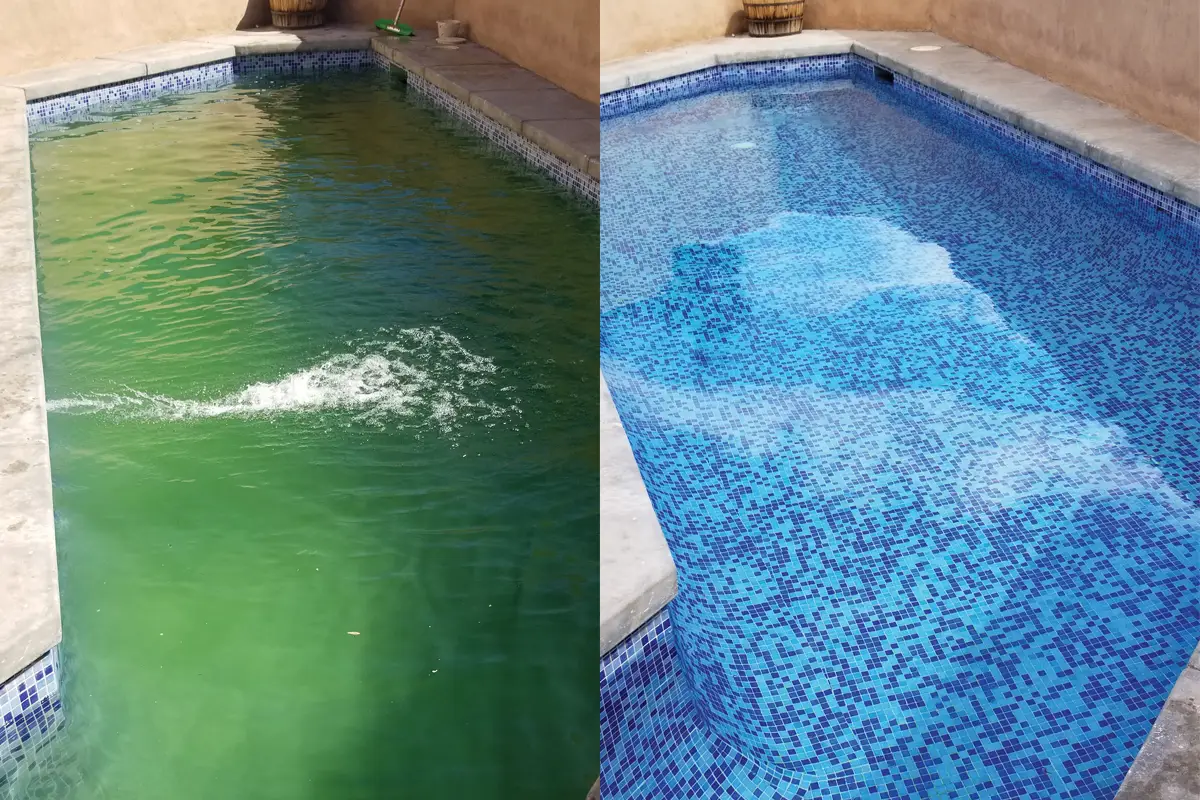




Why Is My Pool Green?
Most green pools come down to one thing: the chlorine ran out or couldn’t keep up. Algae spores blow into outdoor pools every day, and the nutrients algae feed on are always in the water. They come from skin, soil, fertilizer, bird droppings and even dead bugs. As soon as the sanitizer drops, algae gets its chance.
In Central Florida, a few things make that more likely. Summer heat and strong sun burn off chlorine quickly. Afternoon storms dilute the water and wash in dirt and nutrients. A pump or timer that stops working leaves the water sitting still. Too much stabilizer, also called CyA, can also raise the risk of algae. Algae can even store phosphate, one of its main foods, so it can keep growing for a while after the nutrients in the water run low.
Is It Algae or Metals?
Before treating a green pool, we figure out what’s causing the color. This one step decides whether the cleanup works or makes things worse.
Cloudy Green Water Means Algae
If the water is green and murky, so you can’t see the bottom, algae is almost always the cause. That’s the classic green pool, and it responds to brushing, sanitizer and filtration.
Clear Green Water Usually Means Copper
If the water is green but still see-through, dissolved copper is the likely cause. Copper usually comes from corroded heater or pump parts when the pH runs low, or from copper-based algaecides. Here’s the catch. Hitting copper water with a big dose of chlorine or raising the alkalinity can make the copper stain your plaster. Instead, we use a sequestering agent that holds the metal in the water, run the filter and retest after 24 hours. We also fix the low pH that caused it.
Types of Pool Algae
Pool algae comes in three main color groups, and each one behaves a little differently.
Green Algae
Green algae is by far the most common, and the easiest to control. It floats in the water and clings to walls, and it’s what turns a pool from blue to green.
Yellow or Mustard Algae
Yellow algae, often called mustard algae, looks like yellow or brown dust on the walls and floor, usually in shady spots. It’s harder to control and often needs an algicide made for it. It also tends to come back if the pool isn’t cleaned thoroughly.
Black Algae
Black algae grows as dark spots on the walls, often in corners and other areas with poor circulation. It roots into plaster, so it takes hard brushing and targeted treatment. Once black algae is gone, any dark stains it leaves behind may need our acid wash service.
Is It Safe to Swim in a Green Pool?
It’s best to stay out until the water is clear and balanced. Algae itself isn’t believed to be harmful, but it creates real risks. Cloudy water makes it hard to see a swimmer in trouble, which is a major concern for families, as Pool Safely points out. Algae also makes steps, floors and decks slippery. In addition, algae can harbor bacteria. Wait until you can see the main drain and the water tests balanced. Also, keep kids and pets away from the edge while the pool is green, since the bottom and steps are hard to see.
How We Clean Up a Green Pool
Every green pool cleanup follows the same steps:
- Testing the water for chlorine, pH, alkalinity, stabilizer and metals
- Checking the pump, filter and timer to make sure the water can circulate
- Brushing the walls, floor and steps to break up the algae
- Treating the water with the right sanitizer or algicide for the problem
- Running the filter and cleaning it as it loads up with dead algae
- Vacuuming dead algae and debris off the floor
- Balancing the water and confirming it’s clear
We use a stainless-steel brush on plaster and a softer brush on vinyl or fiberglass, since the wrong brush can damage the surface. Dose matters too. Too little sanitizer won’t finish the job, and the algae bounces back.
What Happens to the Dead Algae?
Once algae dies, it doesn’t just disappear. It turns into a gray or brown dust that settles on the floor or floats in the water, and it loads up the filter quickly. We clean or backwash the filter often during a cleanup for that reason.
For very cloudy water, a flocculant can help. It clumps the fine particles together so they sink. After a few hours of circulation, the pump shuts off and the pool sits for 12 to 24 hours. Then we vacuum the settled layer straight to waste, so it never goes back through the filter.
Do You Need to Drain a Green Pool?
Most green pools don’t need to be drained. Brushing, sanitizer and good filtration clear the water in place. Draining is only worth considering in a few cases. For example, when the stabilizer level is very high, partially draining and refilling with fresh water is the usual way to bring it down. Draining also takes care here, because Central Florida’s high water table can push up on an empty pool. We’ll tell you if a partial drain makes sense before we start.
How Long Does a Green Pool Cleanup Take?
Every green pool is different. A lightly green pool with a healthy filter can clear quickly. A pool that’s been green for weeks, full of leaves or running on a weak filter takes longer. High stabilizer levels, heavy nutrients and debris all slow things down. We’ll give you a realistic timeline once we see your pool.
Keeping Your Pool Clear After Cleanup
It’s far easier to keep algae away than to remove it. That means holding a steady chlorine level at all times, keeping the pump and filter running and brushing the walls regularly. Our weekly pool service handles all of that, so your pool doesn’t slip back to green. If a broken pump caused the problem, our pool pump repair team can fix it.
Between visits, a few habits help. Keep the skimmer and pump baskets empty so water keeps moving. After a heavy storm, test the chlorine and add more if it dropped. Finally, if you notice the water turning dull or the walls feeling slippery, call us early. A slightly cloudy pool is much quicker and cheaper to fix than a green one.
Green Pool Cleanup Cost
Green pool cleanup cost depends on how green the pool is, its size, how much debris is in it and the condition of the filter and equipment. A lightly cloudy pool costs less than a pool that’s been swampy for a month. Extra visits, filter cleanings and specialty treatments for mustard or black algae add to the total. We look at your pool first and give you a clear price.
Why Central Florida Homeowners Choose Sunwave
Sunwave is a family-owned Central Florida company with a licensed team. We diagnose before we dump in chemicals, and you get a price before any work begins. There are no long-term contracts. Plus, one company can handle the cleanup, any equipment repairs and your weekly service afterward. See all of our specialty pool services.
Schedule Your Green Pool Cleanup Today
Green pool cleaning is part of our pool service in Central Florida. Fill out the form or call (689) 312-9063 to get your pool clear and blue again.
Our Service Areas
We serve homes across Seminole County and Orange County, including Sanford, Lake Mary, Oviedo, Winter Springs, Orlando, Winter Park and Windermere. See every community in our service area.
Green Pool Cleanup FAQs for Central Florida Homeowners
Here are the green pool questions Central Florida homeowners ask us most. Still have a question? Give us a call at (689) 312-9063.
Chlorine alone will clear a green pool when algae is the cause, as long as you add enough, brush the walls and keep the filter running. It won't clear green water caused by copper, and a big chlorine dose can make copper stain your plaster. If the water is green but clear, test for metals first.
How long it takes a green and cloudy pool to clear up depends on how much algae there is, the filter's condition and the stabilizer level. A lightly green pool with a good filter can clear quickly. A swampy pool full of debris takes longer, often with several filter cleanings. Keep the pump running the whole time.
The fastest way to kill pool algae is to raise the sanitizer to a strong level, brush every surface and keep the filter running around the clock. Brushing breaks up the algae so the chlorine can reach it. Mustard and black algae may need a specialty algicide or targeted treatment. Dosing too little just lets algae bounce back.
Baking soda doesn't clear green pool water, because it doesn't kill algae. Baking soda raises alkalinity. That can help balance the water, but it won't remove algae. If copper is causing the green color, raising alkalinity can even create blue-green stains. Kill algae with sanitizer and brushing, and treat copper with a sequestering agent.
If your pool water is green, keep everyone out and check that the pump and filter are running. Test the water, or have a pro test it, to see whether algae or copper is the cause. Then brush the walls and floor and treat the water. Call a pro if the pool is very green or keeps coming back.
Pool water that's green but clear usually has dissolved copper in it instead of algae. Copper often comes from corroded heater or pump parts when the pH runs low, or from copper algaecides. Don't shock it, since high chlorine can make copper stain. Add a sequestering agent, run the filter, retest after 24 hours and fix the pH.
Mustard algae keeps coming back because it clings to shady walls and hides in equipment, toys, brushes and even swimsuits. Any mustard algae left behind spreads again. Clearing it takes a strong sanitizer level, thorough brushing, a clean filter and cleaning everything that touched the water. A specialty algicide made for yellow algae also helps.
Tropical rains turn a pool green because heavy rain dilutes the chlorine, raises the water level and washes in dirt, leaves and fertilizer that feed algae. Storms can also knock out power to the pump. After a big storm in Central Florida, test the water, raise the sanitizer, empty the skimmer and brush the pool.
The dust on your pool floor after killing algae is usually dead algae. It settles as a gray, brown or greenish layer and can cloud the water again if stirred up. Vacuum it out, ideally straight to waste so it skips the filter. Then clean the filter. If it feels slimy or grows back, the algae isn't fully dead.
A pool turns green overnight when the sanitizer drops too low and algae gets a chance to grow. Algae can turn a clear pool green in less than a day under the right conditions. Heat, strong sun, heavy rain, lots of swimmers or a pump that stopped running can all burn through chlorine fast.