Salt Water Pool Systems in Central Florida
Premium Salt Water Pool Systems for Homeowners Across Central Florida

Salt Water Pool Systems Installed and Serviced Right
Expert Salt Water Pool Conversion, Cleaning and Repair
A salt water pool makes its own chlorine. Instead of buying, hauling and adding chlorine every week, a salt chlorine generator turns dissolved salt into chlorine as the water flows through it. For many Central Florida families, that means steadier chlorine, fewer chemical trips and a pool that’s easier to keep swim-ready through our long summers.
Our salt water pool service covers the whole system. First, we look at your pool, your equipment and your water to see if a salt system is a good fit. Next, we explain the real pros and cons in plain English, including the upkeep a salt pool still needs. Then we size the generator, install the cell in the right spot, add the salt and balance the water.
Before any work, you get a clear quote. Already have a salt water pool system? We also clean scaled-up salt cells, diagnose low-output and no-flow errors and replace worn-out cells. Every visit ends with a water test, so you know your chlorine and pH are where they should be.
We work with Hayward, Pentair, Jandy and Zodiac salt systems across Central Florida. Whether you want a salt water pool conversion or a fix for a cell that stopped making chlorine, fill out the form for a free quote. We’ll give you honest advice on what your pool needs. If salt isn’t the right fit, we’ll tell you that too. Either way, you’ll know exactly what the upkeep looks like before you decide.




How a Salt Water Pool Works
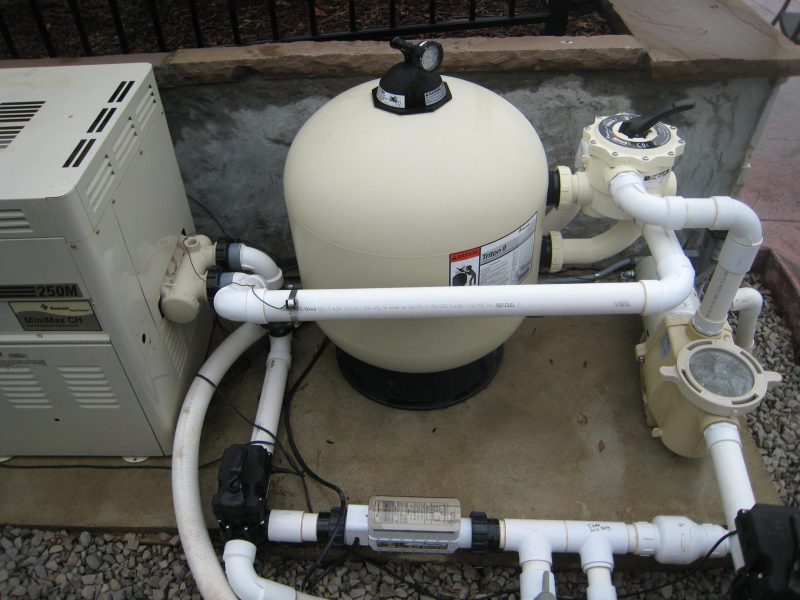
Here’s the part that surprises most people. The salt isn’t what keeps your pool clean. The salt chlorine generator is. The water holds a low level of salt, usually around 3,000 to 3,500 ppm, far less than the ocean. As the pump pushes that water through the salt cell, charged metal plates inside it turn some of the salt into chlorine. That chlorine sanitizes the pool just like chlorine from a jug.
After the chlorine does its job, it turns back into salt, and the cycle repeats. As a result, the system is almost self-sustaining. You only add salt to replace what leaves the pool through backwashing, splash-out and rain overflow.
Salt systems also have built-in safety features. The cell makes a small amount of hydrogen gas, so a flow switch shuts it off whenever the pump stops. Many cells also reverse their charge from time to time to shed scale from the plates.
Salt Water Pool vs Chlorine
Both pools use chlorine to stay clean. The difference is how the chlorine gets there. A traditional pool gets chlorine from tablets, liquid or granules that you add. A salt water pool makes chlorine on site, a little at a time, all day long.
Benefits of a Salt Water Pool
Steady, automatic chlorine production is the big benefit. You store, carry and handle far fewer chemicals. Salt levels stay fairly stable, so you add salt only now and then. Many owners also like that newer systems measure the salt and adjust output on their own. In fact, most new residential pools now come with a salt system.
Downsides of a Salt Water Pool
Salt pools have trade-offs too. The pH tends to creep up over time, so you’ll add acid more often. In addition, calcium scale can build up on the cell plates, especially when calcium hardness runs high, and the cell needs cleaning. Salt adds to the dissolved solids in your water. As those solids climb, metal parts like heater exchangers and light fixtures become more likely to corrode if the pool isn’t properly bonded. Finally, the upfront cost is higher, and salt cells wear out and need replacing.
Salt Water Pool Conversion
A salt water pool conversion adds a salt chlorine generator to an existing chlorine pool. You don’t need to drain the pool or change the finish. Here’s what the job involves:
- Checking your pool size, equipment and water balance
- Sizing a salt chlorine generator for your pool volume
- Installing the cell after the pump, filter and heater
- Wiring the power supply and confirming the flow switch works
- Adding the right amount of salt, about 250 pounds for every 10,000 gallons to reach 3,000 ppm
- Balancing pH, alkalinity, calcium and stabilizer, then setting the output
The cell goes after the heater for a reason. Putting it last keeps freshly made chlorine from flowing through the heater and corroding its copper parts. The standard order is simple: pump, filter, heater, then chlorinator. A qualified technician should always handle the install.
Salt Cell Cleaning
Scale is the most common salt cell problem. Calcium builds up as a white crust on the plates, and a scaled cell makes less chlorine. High pH and high calcium speed it up. In our experience, many Central Florida pools see scale on their cells, so we check it regularly.
Cleaning a cell usually means removing it and soaking the plates in a mild acid solution until the scale dissolves, then rinsing it well. Too strong a mix or too long a soak can damage the plate coating and shorten the cell’s life. For that reason, we follow the maker’s cleaning directions and keep your water balanced so scale forms more slowly.
Salt Chlorine Generator Repair
When a salt system stops keeping up, the cause is often simple. Common issues include low salt, a scaled cell, a flow error, a dirty filter that cuts water flow or a stabilizer level that’s too low for our strong sun. Sometimes the salt reading on the panel doesn’t match a test strip, which usually means the sensor needs cleaning or calibration.
We test the water, check the salt level with a reliable test, inspect the cell and confirm the flow switch and wiring. If the cell has simply worn out, we’ll tell you so and quote a replacement. We’ll also make sure your free chlorine stays in the ideal 2 to 4 ppm range while we sort it out.
Why Salt Readings Don't Always Match
It’s common for the salt reading on your control panel to differ from a test strip or a pool store test. Every test method has a margin of error, and some are only accurate to a couple hundred ppm. A dirty sensor on the cell can also read low. Before adding salt, we confirm the level with a reliable test and clean the sensor if needed. Adding salt you don’t need can push the level too high.
Salt Cell Replacement
Salt cells don’t last forever. A special coating on the plates slowly wears away with use. How long a cell lasts depends on how hard it works, how often it scales and how it’s cleaned. When a clean cell with the right salt level still can’t hold chlorine, replacement is usually the answer. We match the replacement to your generator, install it and reset the system.
Keeping Your Salt Water Pool Balanced
A salt water pool still needs regular testing. Keep free chlorine at 2 to 4 ppm, pH between 7.2 and 7.8, calcium hardness between 200 and 400 ppm and stabilizer in range. Watch the pH closely, since it tends to rise. Add salt when the reading drops, especially after heavy rains. Our weekly pool service handles all of this, and it pairs well with pool automation if you want to control the cell from your phone.
Protecting Stone Decks and Coping
Salty water that splashes onto natural stone and dries there can leave salt crystals in the pores over time. If your deck or coping is travertine or another natural stone, sealing it and rinsing splash areas with fresh water helps protect it. Check with your stone installer about the right sealer before you convert.
Salt Water Pool Conversion Cost
Salt water pool conversion cost depends on your pool’s size, the generator model and how much work the install takes. Bigger pools need larger cells and more salt. Extra plumbing, electrical work or a new control panel adds to the price. Replacing a cell or cleaning one costs less than a full conversion. We look at your setup first and give you a clear price before we start.
Why Central Florida Homeowners Choose Sunwave
Sunwave is a family-owned Central Florida company with a licensed team. We give you the honest pros and cons of salt before you buy, and you get a price before any work begins. There are no long-term contracts. Plus, one company can handle your salt system, your equipment and your weekly cleaning. See all of our specialty pool services.
Schedule Your Salt Water Pool Service Today
Salt water pool service is part of our pool service in Central Florida. Fill out the form or call (689) 312-9063 to get started.
Our Service Areas
We serve homes across Seminole County and Orange County, including Sanford, Lake Mary, Oviedo, Winter Springs, Orlando, Winter Park and Windermere. See every community in our service area.
Salt Water Pool FAQs for Central Florida Homeowners
Here are the salt water pool questions Central Florida homeowners ask us most. Still have a question? Give us a call at (689) 312-9063.
The downside of a salt water pool is the extra upkeep that comes with the cell. The pH tends to rise, so you'll add acid more often. Calcium scale builds on the cell and needs cleaning. Salt raises dissolved solids, which can speed corrosion if bonding is poor. Cells also wear out, and the upfront cost is higher.
A saltwater pool is better than a chlorine pool for owners who want steady, automatic chlorine and fewer chemicals to buy and store. Chlorine sanitizes both pools. A chlorine pool costs less up front and has no cell to clean or replace. The better choice depends on your budget and how hands-on you want to be.
The cost to convert your pool to saltwater depends on your pool's size, the generator model and the install work. Bigger pools need larger cells and more salt. Extra plumbing, electrical work or a new control panel adds to the price. You won't need to drain the pool. We look at your setup and give you a clear quote.
A saltwater pool usually costs more up front than a chlorine pool, because you buy the generator and cell. Ongoing costs are different, though. You'll buy salt and some acid instead of regular chlorine, but cells need cleaning and eventual replacement. Over time the costs can come out close, so convenience is often the deciding factor.
How often salt cells need to be replaced depends on how hard the cell works, how often it scales and how it's cleaned. A special coating on the plates wears down with use. A cell that can't hold chlorine even when clean and at the right salt level is usually due. Your cell's manual lists its expected life.
To clean heavy calcium buildup on your salt cell, turn off the power, remove the cell and soak the plates in a mild acid solution until the scale dissolves. Then rinse it well. Follow the maker's directions, since too strong a mix or too long a soak can damage the coating. Keep pH and calcium balanced to slow future scale.
A salt system that isn't producing chlorine usually has low salt, a scaled cell, a flow problem or a worn-out cell. A dirty filter or closed valve can trip the flow switch. Low stabilizer lets the sun burn off chlorine as fast as it's made. Check the salt level with a test strip, clean the cell and confirm good flow.
Yes, a salt system is a common reason pH keeps rising. Salt water pools tend to see pH creep upward over time, especially when the cell runs a lot or the water is aerated by waterfalls and spillovers. High alkalinity makes it worse. Lowering alkalinity into range and adding acid regularly keeps pH steady.
Adding more salt doesn't make your generator produce more chlorine once the salt is in the maker's recommended range. The cell percentage and run time set the output. Too little salt lowers output, and too much salt can trigger errors or strain the cell. Keep the salt in range and adjust the output setting instead.
A salt water pool can affect travertine and other natural stone if salty water splashes and dries on it repeatedly, since salt crystals can form in the stone's pores. Sealing the stone and rinsing splash areas with fresh water helps protect it. Ask your stone installer about the right sealer before you convert, and reseal on schedule.